Thursday, February 14, 2008

Global warming reality: images, data and cartoons

A picture is worth a thousand words. Let's look at the data, the graphs, and the images.


Projected temp changes

Long term carbon variations

Carbon History and Flux Rev.png - Global Warming Art

Carbon Dioxide Emissions Scenarios.png - Global Warming Art

IPCC Scenarios for 2100.png - Global Warming Art

Greenhouse Gas by Sector.png - Global Warming Art

Major greenhouse gas trends.png - Global Warming Art

Global Surface Map January.jpg - Global Warming Art

Global warming during the 20th century.

Image:Sea Level Projections.png - Global Warming Art

Image:Louisiana Sea Level Risks.png - Global Warming Art

Image:Florida Sea Level Risks.png - Global Warming Art

Image:Bangladesh Sea Level Risks.png - Global Warming Art

Image:North Sea Sea Level Risks.png - Global Warming Art

Hurricane Katrina is believed to have triggered a substantial increase in public concern for environmental issues, and is credited as the motivation behind Vanity Fair's Green Issue.

Graph of the annual and accumulated changes in average glacier thickness during the last 50 years.

Image:Boulder Glacier.jpg - Global Warming Art

Image:Grinnell Glacier.jpg - Global Warming Art

Image:Athabasca Glacier Runoff.jpg - Global Warming Art

Image:Easton Glacier Terminus.jpg - Global Warming Art

Image:Gangotri Glacier.jpg - Global Warming Art

Image:Glacial lakes Bhutan.jpg - Global Warming Art

Image:Northwestern Glacier.jpg - Global Warming Art

Image:Pedersen Glacier.jpg - Global Warming Art

Image:Muir Glacier.jpg - Global Warming Art

Image:McCarty Glacier.jpg - Global Warming Art

Partially Bleached Coral.jpg

Image:Annual Average Temperature Map.jpg - Global Warming Art

Image:Global Warming Predictions Map.jpg - Global Warming Art

Image:Global Warming Predictions.png - Global Warming Art

Image:Risks and Impacts of Global Warming.png - Global Warming Art

Image:Sea-ice 1950s-2050s.gif - Global Warming Art

Image:Larsen B Collapse Size Comparison.png - Global Warming Art

Global Warming Art:About - Global Warming Art

Blue Marble.jpg

Further doubts?
David Suzuki Foundation: Climate Change Skeptics


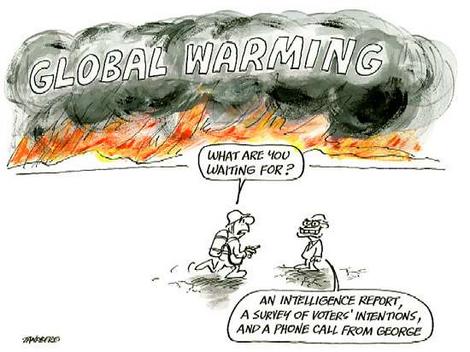
A selection of cartoons:

BushHoax.gif (image)

A greenhouse nightmare

2006-547-global-warming-sceptics.jpg (JPEG Image, 510x392 pixels)

CARTOON-global-wm-Bush.bmp (BMP Image, 381x360 pixels)

global warming in Venice

global2a.gif (GIF Image, 510x333 pixels)

Spratti-GW-toon.jpg (JPEG Image, 500x417 pixels)

Google Image Result for http://www.cartoonstock.com/newscartoons/cartoonists/ksm/lowres/ksmn2088l.jpg

Global warming.jpg (JPEG Image, 470x352 pixels)

Flat earth - This Modern World

cartoon_200201.JPG (JPEG Image, 320x509 pixels)

Google Image Result for http://www.pritchettcartoons.com/illustration/global.gif

Labels: , , , , , , , , ,

Tuesday, June 26, 2007

Hydrogen: Cutting Through the Mental Smog


An Overview: Where we stand with hydrogen fuel now


1. We need to get off polluting fossil fuels asap. This is obvious to just about everyone now.

2. Biofuels are better than fossil fuels - lower emissions for example - but with the possible
exception of celulosic bio-ethanol, they amount to the burning of food for the morally
questionable purpose of hauling our asses around in 2 tons of steel and glass. Unless
celulosic bio-ethanol makes major advances, biofuels are a very poor answer. Presently,
biofuels are biocidal: they amount to mass starvation if implemented widely. Biofuel may
be better than fossil fuel, but not by much.

3. Both hydrogen and electric vehicles offer zero emissions from the tail pipe (with H2 ICEs -
internal combustion engines - there is a tiny amount of NOXs, but practically zero when
compared to dino-juice burners). These two technologies are presently available, but only
on micro-scale: mass implementation is urgently needed.

4. Hydrogen and electric vehicles are demonstrated and proven viable. However, we cannot
wait for mass production of electric or hydrogen vehicles. The auto industry is too slow, and
besides, there are over 1 billion fossil fuel-burning vehicles on the planet now, with a median
life expectancy of 17 years. We cannot wait to retire and replace these vehicles. We must
begin converting all existing vehicles to green energy systems now, and as quickly as possible.

5. Hydrogen or electric? Electric cars are better than fossil fuel burners, but the power grid is
heavily polluting and heavily reliant on fossil fuels. Electric cars are only clean if they are
re-charged with an off-grid clean, renewable energy system. The same is true for the
sourcing of energy for hydrogen vehicles: hydrogen from fossil fuels is not a smart
answer - unless you're an oil and gas company. Hydrogen only makes true environmental
sense when it is derived from clean, renewable wind or solar power, using waste (methane
from sewage, landfills or compost) or water - via reformation or electrolysis. In either case,
a distributed, decentralized green energy supply is what is needed, along with immediate
vehicle conversions.
There are passionate supporters of both green-tech camps, but the fact is, both are viable
and ready to go now, and either would be clean, renewable, and infinitely preferable to fossil
fuels, so long as they are implemented intelligently.


Re: Hydrogen generation through electrolysis requires more energy input than you get out.

(A reply to comments on Autoblog)

If we erroneously view hydrogen as an energy source, then this is an insurmountable problem: an energy source is not an energy source if it consumes more energy than it produces - obviously. There may be ways to harness hydrogen energy aside from electrolysis that are net energy producing processes, however, the point here is that hydrogen produced by electrolysis is not an energy source, but an energy carrier - like a battery. You don't say, well, batteries are only energy carriers, not an energy source, therefore electric cars are non-feasible. You don't say batteries defy the second law of thermodynamics because they require more energy than they produce - of course, because they do not produce energy; they merely store it.

Hydrogen produced by electrolysis likewise is a means to store energy - in hydrogen - for a hydrogen vehicle for example, just as a battery stores energy in an electric vehicle. In either case, the battery or the hydrogen is simply an energy storage medium, and either requires a primary energy source - ideally, solar or wind. Is this not clear enough? It is amazing how intelligent people can miss the obvious.

We don't need to resort to physics principles to figure this out; we need merely to think it through. Hydrogen vehicles, using electrolysis generation systems which are powered by solar or wind power, are a viable and proven, clean, renewable and sustainable technology, right now. We should stop the non-sense and start implementing solar-hydrogen systems immediately. The energy may cost more than gas and oil, but gas and oil are costing us our future on this planet. The transition must begin.


Re: Big oil and energy companies control energy distribution networks

In the future - or now - households, businesses and communities can produce their own clean, green, sustainable energy - yes. And that being the case, they can also generate their own hydrogen fuel for transportation using solar and wind powered electrolysis. Big oil, big coal, and the corporate energy companies in general - including the giant contractor/construction firms that build the nuke plants - can all go the way of the dodo. Hydrogen is not antithetical to such a distributed, decentralized, locally-controlled non-fossil fuel clean energy infrastructure, but instead a vital component.


Fury and Fanfare Over Brad Pitt's BMW Hydrogen 7

Reply to comments on Autoblog Green

I'm glad to see such a passionate and intelligent discussion about the relative advantages and disadvantages of hydrogen vehicles as compared with electric vehicles, even if it is a bit over-zealous at times. (The perfection of a given alternative may end up having less of an ecological impact than the speed of implementation of alternatives to fossil fuels, imperfect as those alternatives may be: perfectionism x micro-scale = minimal effect; whereas, a step forward that is widely adopted = major positive impact.)

A couple of points of clarification:

1. Hydrogen does not have to be produced from fossil fuels. The oil and gas companies want this, naturally, so that they will be the ones to control the hydrogen infrastructure for the coming decades, but such a solution is ridiculous, as was pointed out above. Hydrogen only makes sense when it is produced using non-fossil fuel green energy, such as solar or wind, utilizing electrolysis of water or reformation of methane from sewage or landfill waste. If done in this way, hydrogen is a clean, renewable fuel.

2. Electric vehicles require a primary source of power, just as hydrogen vehicles do: with electric vehicles, the primary source of power at present is the power grid, which is heavily polluting due to its heavy reliance on coal and other fossil fuels.

Electric vehicles are not green unless their power source is solar or wind: exactly as with hydrogen vehicles.

Let's stop the tribal warfare. You'd think the hydrogen and electric vehicle advocates were the Hatfields and McCoys.

If we were to compare the best application of hydrogen (distributed green energy generation) with the worst application of electric vehicles (plug into the largely coal-fired power grid), we could come to an equally one-sided view in abhorrence of the latter in favour of the former. Let's try to be fair-minded and clear-headed here.

3. There are 1 billion fossil fuel ICEs on the planet now, with a median life expectancy of 17 years. There is no way we can wait until these vehicles are retired and replaced. We need to switch to some combination of hydrogen and electric vehicles right now - or stop driving.

4. We do not have to wait - nor can we wait - for mass production of either electric vehicles or hydrogen FCVs (fuel cell vehicles) or ICEs: any existing ICE can be converted to either hydrogen or electric now. Take your choice, but one of these - or a combination of both - must be done asap.

5. Locally-based, distributed green energy generation, in combination with hydrogen and/or electric vehicle conversion, is what we urgently need. The rest is pretty much academic.

(P.S.: Hydrogen is safer than gasoline. Research it for yourself if you have any doubt. The public has been misinformed on that point. I had assumed in writing this post that the audience already had such basic understanding.)


J. Todd Ring,
June 26, 2007

See also:

BMW officially announces the BMW Hydrogen 7 - AutoblogGreen

Brad Pitt thinks BMW's Hydrogen 7 is perfect for Ocean's 13 premiere - AutoblogGreen

Psst, Deputy Mayor of London, wanna free BMW Hydrogen 7 ?

Hydrogen Madness @ NY Auto Show | ecorazzi.com :: the latest in green gossip

Honda's FCX makes European debut - AutoblogGreen

Canada To Build Hydrogen Super Highway

California Hydrogen Highway Spans 800 Miles

Quantum's Hydrogen Prius at Norsk Hydro's first hydrogen station - AutoblogGreen

* Energy self-sufficient Danish community makes hydrogen using wind power

Stabilization Wedges: Solving the Climate Problem for the Next 50 Years with Current Technologies

Smelling Land: The hydrogen defense against climate catastrophy

H2.ca - Hydrogen Strategy for Canada

Powell's Books - Lives Per Gallon: The True Cost of Our Oil Addiction by Terry Tamminen

Powell's Books - It's the Crude, Dude: Greed, Gas, War, and the American Way by Linda Mcquaig

Powell's Books - The Weather Makers: How Man Is Changing the Climate and What It Means for Life on Earth by Tim Flannery

Powell's Books - The Party's Over: Oil, War and the Fate of Industrial Societies by Richard Heinberg

Winning the Oil Endgame

Amazon.com: The Hydrogen Economy: Books: Jeremy Rifkin

Amazon.com: Tomorrow's Energy: Hydrogen, Fuel Cells, and the Prospects for a Cleaner Planet: Books: Peter Hoffmann,Tom Harkin

Amazon.com: Amory B. Lovins: Building the hydrogen economy. (Conversations).: An article from: E: Books: Jim Motavalli

Amazon.com: The Solar Hydrogen Civilization: The Future of Energy Is the Future of Our Global Economy: Books: Roy McAlister

Readings: hydrogen economy course - UC Davis: Institute of Transportation Studies

Search this blog: "green cars"......there's tons more info here.

Labels: , , , , , , , , ,

Saturday, December 02, 2006

Global warming may cause more sudden disaster than most recognize:


If - or rather, according to scientists, when - the West Antarctic Ice Sheet collapses, sea levels will rise at least 5 meters or more (over 15 feet). The West Antarctic Icesheet is approximately 2000 meters thick, holds an estimated 30 million cubic kilometers of water, and covers an area the size of Mexico. New evidence indicates that this may be a sudden transition, and not a gradual one. In other words, global warming may hit us far more dramatically and abruptly than most anticipate.

The Larsen Ice Sheet collapsed in 2002, and did so suddenly. New evidence from ice core samples taken by a New Zealand team of scientists shows that sudden transitions - from ice sheet to open ocean - have been the case in the past.

Consider how many highly populated regions and cities are less than 5 meters above sea level. A sudden rise of sea level of 5 meters or more would have global catastrophic effects. Try to envision an equivalent effect to hundreds of hurricance Katrinas hitting us simulataneuosly around the globe. This may be pretty hard to comprehend, but the research findings indicate an ecological impact from such an event to be on an order of magnitude that may cause global systems failure for human civilization. Reading more about our history, we see that this has happened to a number of civilizations in the past. The Maya, the people of Easter Island, Sumeria, Rome: for a variety of reasons, each of these saw the collapse of a civilization. Ronald Wright chronicles such trainwrecks of our collective human cultural history in A Brief History of Progress, with meticulous research, and a clear warning: it could happen to us. We would have to be pretty ignorant of our history, as well as deeply in denial as to the seriousness of our present ecological crisis, to think that such a thing couldn't happen to us. In fact, if the West Antarctic Icesheet fell suddenly - as evidence indicates it will - we may have to rebuild from the ground up.

The good news? The Maya adapted. Rome fell, but humanity carried on. Sumeria is dust, but the ongoing experiement in what it is to be human, is still alive. We need to learn from our collective mistakes. We need to learn from history.

Unfortunately, one thing we learn from history is that civilizations frequently do fall. When this happens, it is no small event, and it is certainly a great understatement to say that it is a major adjustment. We might be wise to do all we can to address our ecological crisis, and also, to address in advance the potential fallout from the crisis. If we blithely carry on and do not address the ecological crisis with the level of response it demands, we should have some idea as to what to expect. And if we do not prepare for the fallout of our self-created ecological crisis, we will quite possibly be blind-sided: like hitting an iceberg at night.

It makes no sense to be passive about the ecological crisis we've created for ourselves. Clearly, the intelligent thing to do is to address it: to make a rapid and intensive effort to switch to ecologically sustainable ways of living and having an economy. But while we do what is most sensible and make a dedicated and intensive effort toward a transition to a ecologically sustainable societies, communities and ways of living; we should also prepare for some unknown amount of disaster - for we have already set that in motion.

At this point it must also be mentioned that the "we" I am speaking of primarily relates to my neighbours and fellow citizens in the "leading" industrialized nations. The wealthiest 20% of the world's populace consumes roughly 80% the world's wealth and produces over 60% of the world's pollution. It is the consumer society, especially in its particular form of oil-dependency and petro-chemical disposable everything, which is rapidly destroying our childrens' future.

For example:

- The average Briton produces 126 times more carbon dioxide than someone living in Nepal

- CO2 emissions from using an electric kettle for one year in the UK are equivalent to average person's total annual CO2 emissions in Nepal

"Lives in Bangladesh will be devastated though no fault of the people concerned. We are not causing the climate change that is killing our people. The average Bangladeshi produces .3 tons of carbon dioxide per annum; the average citizen in the world's biggest polluting nation, the United States, produces 20 tons of CO2 each year. So as well as calling on all the world's rich nations to reduce emissions and tackle that challenge now, we also know that a certain amount of irreversible change is upon us."
-
Sabihuddin Ahmed, High Commissioner for Bangladesh

But all ethical questions aside, if we were to ask the question of appropriate response simply in terms of intelligent self-interest (if there is such a thing), what would that mean? What would be an intelligent response to such evidence regarding the ecological crisis we have created? Quite simply, face it head on. Denial and inaction will only heighten the impact later, when it becomes truly unavoidable.

Take this recent statement by Richard Jones, the vice president for engineering of the Hartford Insurance Company. “Climate change is real,” said Jones. “To me, proving that earth’s climate is changing from human actions—namely global warming—is like statistically ‘proving’ the pavement exists after you have jumped out a 30-story building. After each floor, your analysis would say, ‘so far, so good,’ and then, at the pavement, all uncertainty is removed.”

As Einstein's protege, physicist David Bohm has said, "In the long run it is far more dangerous to adhere to illusion than to face what the actual fact is."

Presently however, as David Suzuki put it, "We are speeding toward a brick wall at 100 mph, and everyone is arguing about where they're going to sit."

JTR


Massive Ice Shelf 'May Collapse without Warning'

The Climate Disaster is Upon Us - Now

Global Warming in Antarctica

For My People, Climate Change is a Matter of Life and Death

Nepal's Farmers on the Front Line of Global Climate Change

Climate: A Stich in Time... Gwynne Dyer

How the insurance industry is putting its money on global warming

As the World Burns - MoJo report

Global Warming-- Signed, Sealed, Delivered

David Suzuki Foundation: Climate Change Skeptics

Climate Change: Tipping Point

Tackle Climate Change or Face Deep Recession, World's Leaders Warned

When It Comes to Global Warming, Market Rule Poses a Mortal Danger

It's Hard to Explain, Tom, Why We Did So Little to Stop Global Warming

Climate Change: Time is Running Out

David Suzuki News October 30, 2006: Stern warning: warmer planet, colder economy

Arctic melt may dry out US west coast - 11 April 2004 - New Scientist

Panel Sees Growing Melting Arctic Threat

Warming hits 'tipping point' | Special reports | Guardian Unlimited

ZNet |Ecology | Siberia Melting...

David Suzuki News November 09, 2006: New report shows Ontario gaining more from conservation than nuclear power

News: The Hour: Suzuki 's Kyoto

Labels: , , , , , , , , , , , , , ,


A "Must-Read"
Short List:
Author's Picks


Necessary Illusions; Thought Control in Democratic Societies - Noam Chomsky

Year 501: The Conquest Continues - Noam Chomsky

The Dispossessed - Ursula Leguin

Stolen Continents: 500 Years of Conquest and Resistance - Ronald Wright

The Chalice and the Blade - Riane Eisler

The Ecology of Freedom - Murray Bookchin

The Power Elite - C. Wright Mills

The Corporation - Joel Bakan

Escape from Freedom - Erich Fromm

Roads to Freedom - Bertrand Russell

The Spectrum of Consciousness - Ken Wilber

A History of God - Karen Armstrong

A Short History of Progress - Ronald Wright

The Party's Over: Oil, War and the Fate of Industrial Societies - Richard Heinberg

Hegemony or Survival: America's Quest for Global Dominance - Noam Chomsky

Blowback: America's Recruitment of Nazis and Its Effects on the Cold War - Christopher Simpson

The CIA's Greatest Hits - Mark Zepezauer

Drain The Swamp And There Will Be No More Mosquitoes - Chomsky

Rollback

The Responsibility of Intellectuals

The Threat of a Good Example - Chomsky Example Odonian

A Marxist Threat to Cola Sales?

Scientific American Mind: The Samaritan Paradox

Their Libertarianism And Ours

Civil Disobedience - Henry David Thoreau - full text

Labels: , , , , , , , , , , , , , , ,